

Gypsum sets fast. That speed is good for production, and it is bad for construction workers. A wall needs time. A worker needs time to spread the plaster, level it, and finish the surface. Pure gypsum often sets in a few minutes, and that is not enough. A gypsum retarder solves this problem. It slows down the setting reaction of gypsum and gives workers a comfortable working window. This article explains what a gypsum retarder is, what types exist, how dosage changes the setting time, and how the retarder affects gypsum strength. It also introduces ZhiFormix™ GR-01, the gypsum retarder from Zhiwei (Jinan) New Materials Co., Ltd.
What Is a Gypsum Retarder?
A gypsum retarder is a chemical additive for gypsum building materials. Its main job is simple. It lowers the setting speed of gypsum. Builders use it in plastering gypsum, bonding gypsum, gypsum putty, and gypsum products. All of these materials need enough open time for proper application.
Gypsum retarder usually comes as a white or brown powder. It dissolves easily in water. Workers can mix it directly into dry powder formulas, and it spreads evenly through the mix. The dosage is small, but the effect is strong. A small change in dosage can change the setting time by hours.
Why Gypsum Needs a Retarder
Hemihydrate gypsum reacts with water very quickly. Without any additive, the mix can start to harden within minutes. That creates three problems on site.
First, workers rush. They cannot finish a large wall before the plaster stiffens. Second, material goes to waste. Hardened plaster in the bucket cannot be used again. Third, the surface quality drops. A rushed finish leaves marks and uneven areas.
A gypsum retarder fixes all three problems. It extends the workable time from minutes to hours. Workers get a calm pace. Waste drops. The finished surface looks smooth and even. For any project with plastering gypsum or gypsum putty, a retarder is not a luxury. It is a basic need.
The Three Main Types of Gypsum Retarders
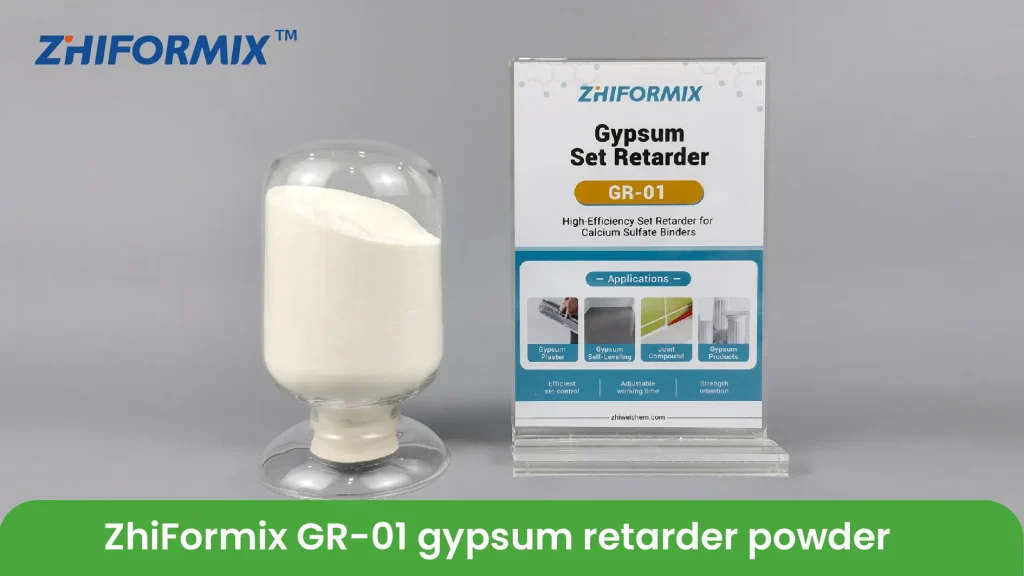
Researchers group the common retarders into three classes. Each class works in its own way, and each one fits different formulas and budgets.
Organic Acids and Their Soluble Salts
This group includes citric acid, sodium citrate, tartaric acid, potassium tartrate, acrylic acid, and sodium acrylate. Citric acid gets the most research attention, and it also shows the best retarding effect. A very small amount of citric acid or its salt can slow gypsum setting strongly. That makes it popular, but it also makes dosage control critical. Too much citric acid can hurt the final strength of the gypsum, and we will cover that in the strength section below.
Alkaline Phosphates
This group includes sodium hexametaphosphate and sodium polyphosphate. These retarders give a moderate and steady effect. They sit between organic acids and borax in both retarding power and strength impact. Many commercial formulas use phosphates because they are easy to handle and they mix well with other additives.
Protein-Based Retarders
Protein retarders form the third class. They slow the growth of gypsum crystals during hydration. They are widely used in commercial gypsum plaster products because they give reliable results at low dosages.
How Gypsum Retarders Affect Gypsum Strength
A retarder does more than change the setting time. It also changes the strength of the hardened gypsum. This is the part many buyers overlook, and it matters a lot.
Tests on three common retarders show a clear pattern. The three retarders are citric acid, sodium polyphosphate, and borax. As the dosage rises, the gypsum strength falls. The dry strength and the wet strength follow the same trend.
Citric acid causes the largest strength loss. The dry flexural strength drops sharply when the dosage passes 0.07%. The dry compressive strength drops sharply when the dosage passes 0.05%. The wet flexural strength falls almost in a straight line as dosage rises. At a 0.1% dosage, the wet flexural strength of mold gypsum is only 0.5 MPa. That is a big drop, and it shows why citric acid needs careful control.
Sodium polyphosphate is gentler than citric acid. Its strength loss is much smaller at the same dosage. But it still causes more strength loss than borax.
Borax is the kindest of the three. It has the smallest negative effect on gypsum strength.
So the ranking is clear. For strength loss, from smallest to largest: borax < sodium polyphosphate < citric acid. This order matches their retarding power as well. The stronger the retarding effect, the larger the strength loss tends to be.
What does this mean in practice? Borax is the most suitable choice when strength matters most. Sodium polyphosphate also works well when the dosage stays low. Citric acid is powerful, but its dosage should stay below 0.03% to protect strength. The lesson is simple. More retarder is not always better. The right dosage gives you the setting time you need and keeps the strength you want.
How to Use a Gypsum Retarder: Dosage Guide
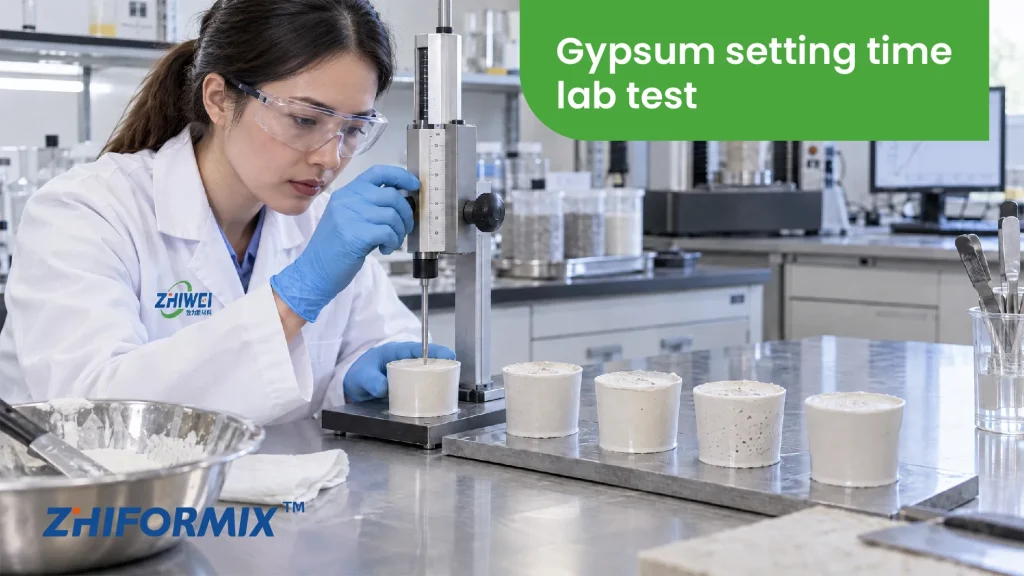
The correct dosage depends on your gypsum type and your target setting time. For hemihydrate gypsum, the normal dosage range is 0.03% to 0.5% of the gypsum weight. The rule is simple. More retarder means a longer setting time. Less retarder means a shorter setting time.
The table below gives a practical reference. It is based on pure hemihydrate gypsum with a 0.5% cement addition, which is a common setup for plastering gypsum.
| Gypsum Retarder Dosage | Gypsum Setting Time |
|---|---|
| 0.1% | 30 min – 1 h |
| 0.15% | 1 h – 1 h 30 min |
| 0.2% | 1 h 30 min – 2 h |
| 0.3% | 2 h – 3 h |
| 0.4% | 3 h – 5 h |
Use this table as a starting point, not as a final answer. Different gypsum sources behave differently. Natural gypsum, desulfurized gypsum, and phosphogypsum each react in their own way. Always run a small test with your own gypsum before full production. Find the dosage that gives you the setting time you need, and then lock it in.
Temperature Changes the Dosage
Air temperature affects gypsum setting more than many people expect. Warm weather speeds up the reaction. Cold weather slows it down. So the retarder dosage should change with the season.
When the temperature rises, increase the retarder dosage a little. When the temperature drops, reduce it a little. A formula that works perfectly in spring may set too fast in summer. Keep a simple dosage chart for hot days and cold days. Your workers will thank you, and your waste rate will stay low.
The Cement Trick for Plastering Gypsum
There is a useful trick for plastering gypsum. Combine the gypsum retarder with 0.5% cement. This combination extends the retarding time effectively. It gives a longer and more stable working window than the retarder alone.
This method is popular because it is simple and cheap. You do not need a special product. You just add a small amount of cement to the formula along with your retarder. Test the combination with your own materials first, and then use it with confidence.
Why Buyers Choose ZhiFormix™ GR-01 From Zhiwei
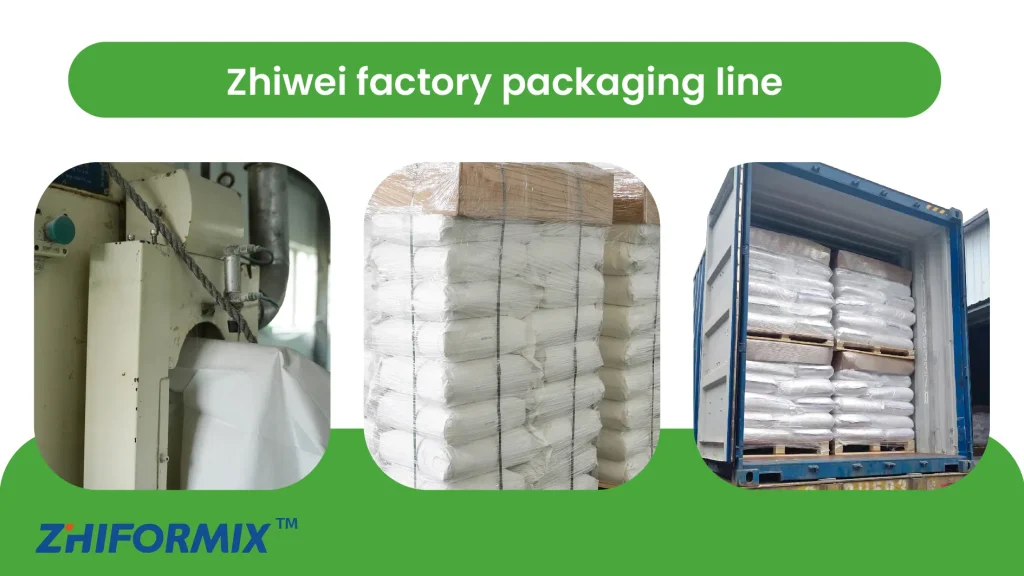
Zhiwei (Jinan) New Materials Co., Ltd. supplies construction chemical additives to customers around the world. The company is known for its cellulose ether products, and it brings the same quality mindset to its gypsum additive line. ZhiFormix™ GR-01 is Zhiwei’s gypsum retarder for the global market.
ZhiFormix™ GR-01 works in plastering gypsum, bonding gypsum, gypsum putty, and gypsum-based products. It is a free-flowing powder, and it dissolves easily in water. It mixes evenly into dry powder formulas with normal mixing equipment. The dosage follows the standard range of 0.03% to 0.5%, so it fits easily into existing formulas without a full redesign.
Buyers choose ZhiFormix™ GR-01 for four practical reasons.
First, it gives adjustable setting time. A small dosage change moves the setting time from 30 minutes to several hours. You control the working window, and you match it to your project and your climate.
Second, it protects strength at the right dosage. The strength data in this article shows that dosage control is everything. ZhiFormix™ GR-01 is designed to deliver strong retarding power at a modest dosage, so your gypsum keeps the strength your customers expect.
Third, it is easy to use. The powder blends well, and it works with the common 0.5% cement combination for plastering gypsum. Your production team needs no special training and no new equipment.
Fourth, you get real technical support. Zhiwei helps with grade selection, dosage testing, and sample follow-up. You can request samples and test ZhiFormix™ GR-01 with your own gypsum before you place an order. That removes the guesswork from switching suppliers.
If you produce gypsum plaster, gypsum putty, or bonding gypsum, ZhiFormix™ GR-01 deserves a place in your next trial. Contact Zhiwei (Jinan) New Materials Co., Ltd. for samples, technical data, and a quote.
Frequently Asked Questions
How Much Gypsum Retarder Should I Use?
For hemihydrate gypsum, use 0.03% to 0.5% of the gypsum weight. Start with 0.1% for a 30-minute to 1-hour setting time. Increase the dosage step by step until you reach your target. Always test with your own gypsum first.
Will a Gypsum Retarder Weaken My Gypsum?
It can, if you overdose it. Citric acid type retarders cause the largest strength loss, so keep their dosage below 0.03% when strength matters. Borax and phosphate type retarders are gentler. A balanced product at the correct dosage gives you longer working time with only a small strength change.
Can I Use Gypsum Retarder in Hot Weather?
Yes. Heat speeds up gypsum setting, so increase the retarder dosage in summer. Reduce it again in cold weather. Keep separate dosage records for hot and cold seasons.
Does ZhiFormix™ GR-01 Work With Cement?
Yes. For plastering gypsum, combine ZhiFormix™ GR-01 with 0.5% cement. This combination extends the setting time effectively and gives a stable working window.
Where Can I Buy ZhiFormix™ GR-01?
ZhiFormix™ GR-01 comes from Zhiwei (Jinan) New Materials Co., Ltd. Visit zhiweichem.com to request samples and pricing. The Zhiwei team supports international customers with grade selection and order execution.
Conclusion
A gypsum retarder is a small additive with a big job. It slows gypsum setting and gives workers the time they need for plastering, bonding, and putty work. The three main types are organic acids and their salts, alkaline phosphates, and protein-based retarders. Each type has its own strength profile, and dosage control decides whether you get the best of both worlds: long working time and solid final strength. Use the dosage table in this article as your starting point, adjust for temperature, and consider the 0.5% cement combination for plastering gypsum. And when you need a reliable retarder with real technical support, try ZhiFormix™ GR-01 from Zhiwei (Jinan) New Materials Co., Ltd.