

Is gypsum a retarder or an accelerator? The question sounds like a trick, but it is a real question from real buyers. The short answer is simple. Gypsum is both. It works as a retarder in one material system, and it works as an accelerator in another. The role changes with the chemistry around it.
This matters for your production. If you make cement, you use gypsum to slow things down. If you make gypsum plaster products, you may fight against gypsum speeding things up. This article explains both roles in plain language, and it shows you how to control setting time in your own formulas.
The Short Answer: Gypsum Is Both
Gypsum is calcium sulfate dihydrate, CaSO4·2H2O. It is a natural mineral, and it sits at the center of two different setting reactions.
In Portland cement, gypsum acts as a retarder. Cement makers add a few percent of gypsum to the clinker, and this addition increases the setting time. Without gypsum, fresh cement paste would stiffen too fast for normal construction work.
In gypsum plaster, gypsum acts as an accelerator. Finely ground dihydrate gypsum added to hemihydrate plaster provides seed crystals. These seeds speed up the crystallization, and the plaster sets faster.
Same material, opposite jobs. The next sections explain why.
Gypsum as a Retarder in Cement
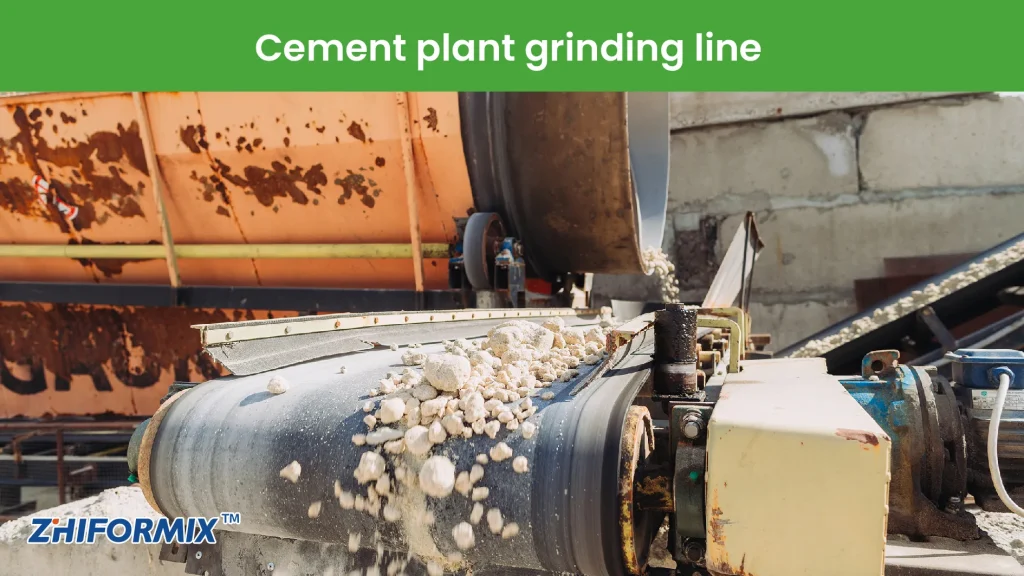
Portland cement is made by grinding clinker with a small amount of gypsum. The normal addition is around 3% to 5% of the cement weight. This gypsum is not a filler. It is a functional additive, and its job is to control the setting time.
Fresh cement reacts with water very quickly. One component of clinker, tricalcium aluminate, reacts almost instantly. Without control, the paste would go through a “flash set.” It would stiffen in the mixer before workers could pour it. That would make the cement useless on a construction site.
Gypsum prevents this problem. It increases both the initial and the final setting time of cement. Workers get enough time to mix, transport, pour, and finish the concrete. This is why every standard Portland cement contains gypsum.
How Gypsum Slows Down Cement
The mechanism is easy to understand. When cement meets water, the tricalcium aluminate wants to react fast. Gypsum steps in and reacts with it first. This early reaction forms a mineral layer on the cement particles.
Think of it as a protective coating. The coating covers the most reactive particles and slows their contact with water. The fast reaction calms down, and the slower strength-giving reactions get time to develop properly.
Dosage matters here too. The right amount of gypsum gives a normal, workable setting time. Too much gypsum causes its own problems, including expansion and unsoundness in the hardened cement. Cement plants control this addition carefully, usually in the 3% to 5% range.
Gypsum as an Accelerator in Gypsum Plaster
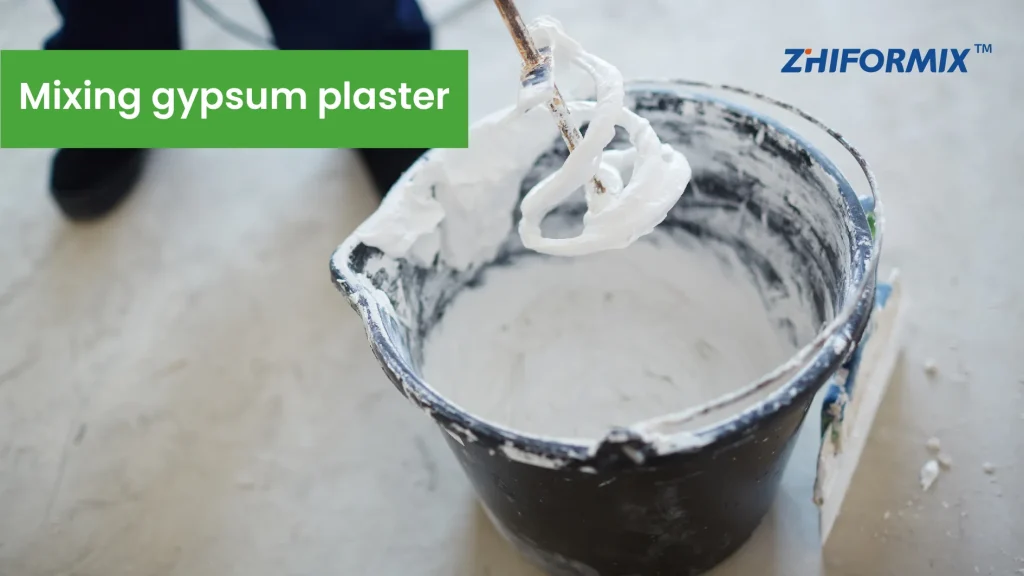
Now flip to the other system. Gypsum plaster starts as hemihydrate powder, CaSO4·0.5H2O. Workers mix it with water, and it turns back into dihydrate gypsum. This rehydration is the setting reaction.
The setting happens in stages. First the hemihydrate dissolves in water. Then the solution becomes supersaturated. Then tiny dihydrate crystals must form from nothing. Scientists call this the nucleation stage, and it is the bottleneck of the whole process. Nothing seems to happen for a while, and then crystals suddenly appear and grow fast.
Here is where gypsum becomes an accelerator. If you add finely ground dihydrate gypsum to the fresh plaster mix, you skip the bottleneck. The added particles act as seed crystals. New crystals grow directly on these seeds instead of forming from nothing. The induction period shrinks, and the plaster can set almost immediately.
Industry uses this trick on purpose. Set accelerators for gypsum board and gypsum plaster are often made by grinding gypsum with a small amount of grinding aid. The ground gypsum is the active ingredient. A tiny addition changes the setting time in a big way.
Why One Material Does Two Opposite Jobs
This confuses many people, so let us make it clear. Gypsum does not have a fixed identity as a “retarder chemical” or an “accelerator chemical.” Its role depends on the chemical system it joins.
In cement, the problem is a runaway aluminate reaction. Gypsum joins that reaction early and forms a calming layer. The result is slower setting. Gypsum is a retarder because the system needs slowing down, and gypsum provides the mechanism.
In gypsum plaster, the problem is a slow nucleation step. Added gypsum provides ready-made crystal surfaces. The result is faster setting. Gypsum is an accelerator because the system needs a starting point, and gypsum provides it.
The lesson is practical. Do not ask “what does this additive do” in isolation. Ask “what does it do in my system.” The same material can push the setting time in either direction.
What This Means for Your Production
If you produce cement, gypsum is your friend for setting control. Keep the addition in the normal range, test each clinker source, and watch for signs of too much sulfate.
If you produce gypsum-based products, the situation reverses. Your base material already sets fast. Seed crystals from recycled gypsum or fine dihydrate can make it set even faster. For construction products like plastering gypsum, bonding gypsum, and gypsum putty, fast setting is usually the enemy. Workers need 30 minutes to several hours of working time, not a few minutes.
That is why the gypsum products industry uses gypsum retarders. A retarder slows the crystal growth and extends the working window.
When Gypsum Products Need a Retarder
Let us connect the science to your factory floor. Gypsum plaster sets through crystallization, and anything that seeds that crystallization speeds it up. In real production, this means your plastering gypsum or gypsum putty can stiffen before the worker finishes the wall. The result is wasted material and a poor surface.
A gypsum retarder solves this. It slows the growth of dihydrate crystals and stretches the working time from minutes to hours. The dosage is small, usually 0.03% to 0.5% of the hemihydrate gypsum weight. A small change in dosage gives a big change in setting time, so testing with your own gypsum source is always worth it.
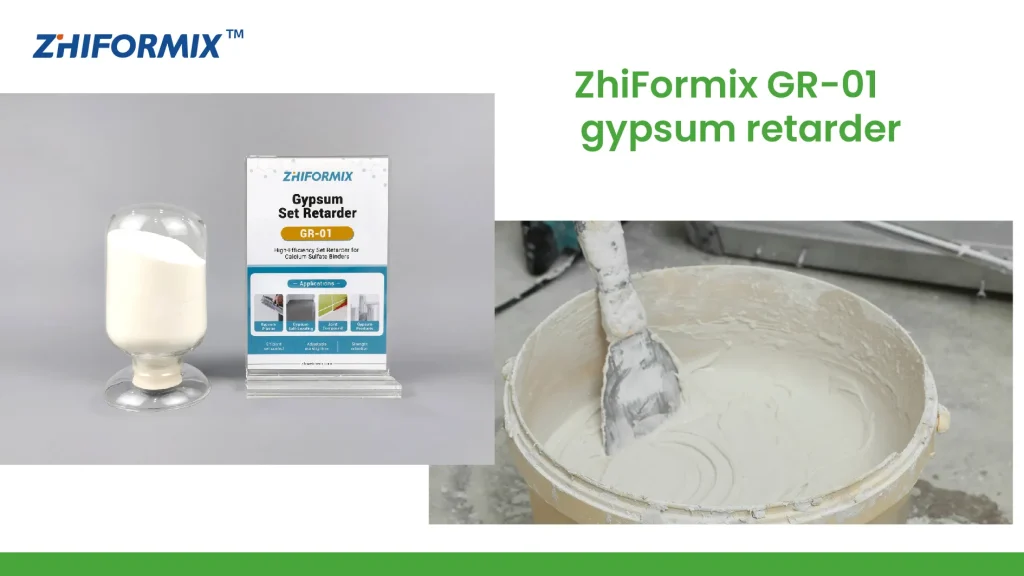
This is where ZhiFormix™ GR-01 from Zhiwei (Jinan) New Materials Co., Ltd. earns its place. ZhiFormix™ GR-01 is a gypsum retarder built for plastering gypsum, bonding gypsum, gypsum putty, and gypsum-based products. It is a free-flowing powder that dissolves easily in water and blends evenly into dry powder formulas.
Buyers choose ZhiFormix™ GR-01 for three practical reasons. First, it gives adjustable setting time. You dial the working window from 30 minutes to several hours through dosage, and you match it to your climate and your project. Second, it is easy to dose. The standard 0.03% to 0.5% range fits existing formulas, and it works with the common 0.5% cement combination for plastering gypsum. Third, you get real technical support. Zhiwei helps with dosage testing and sample follow-up, so you can trial ZhiFormix™ GR-01 with your own gypsum before you commit.
If fast setting is costing you material and labor, a retarder is the fix. Contact Zhiwei (Jinan) New Materials Co., Ltd. for samples, technical data, and a quote.
Frequently Asked Questions
Is Gypsum Used as a Retarder in Cement?
Yes. Cement makers add around 3% to 5% gypsum to Portland cement clinker. The gypsum increases the setting time and prevents flash setting, so workers get enough time to mix, pour, and finish the concrete.
Can Gypsum Speed Up Plaster Setting?
Yes. Finely ground dihydrate gypsum acts as seed crystals in hemihydrate plaster. The seeds skip the slow nucleation stage, so new crystals grow faster and the plaster sets sooner. Industry makes set accelerators exactly this way.
How Much Gypsum Is Added to Cement?
The normal range is about 3% to 5% of the cement weight. Too little gypsum risks flash setting. Too much gypsum can cause expansion and unsoundness in hardened cement.
If Gypsum Can Accelerate, Why Do Gypsum Products Need Retarders?
Because the natural setting of gypsum plaster is already fast, and seed crystals make it faster. Construction work needs a longer working window. A gypsum retarder slows crystal growth and gives workers 30 minutes to several hours instead of a few minutes.
What Is the Difference Between a Gypsum Retarder and a Gypsum Accelerator?
A retarder slows the setting reaction and extends working time. An accelerator speeds the setting reaction and shortens working time. In gypsum systems, retarders typically slow crystal growth, while accelerators like ground gypsum provide seed crystals for faster crystallization.
Where Can I Buy a Gypsum Retarder?
Zhiwei (Jinan) New Materials Co., Ltd. supplies ZhiFormix™ GR-01, a gypsum retarder for plastering gypsum, bonding gypsum, and gypsum putty. Visit zhiweichem.com to request samples and pricing.
Conclusion
So, is gypsum a retarder or an accelerator? It is both, and the system decides. In Portland cement, gypsum is a retarder. It reacts with tricalcium aluminate, forms a protective layer, and prevents flash setting. In gypsum plaster, gypsum is an accelerator. Ground dihydrate gypsum provides seed crystals, skips the slow nucleation stage, and makes the plaster set faster.
For producers, the takeaway is simple. In cement, control your gypsum addition to keep a workable setting time. In gypsum products, expect fast setting and use a retarder when your workers need more time. And when you need that retarder, ZhiFormix™ GR-01 from Zhiwei (Jinan) New Materials Co., Ltd. gives you adjustable setting time, easy dosing, and real technical support.