
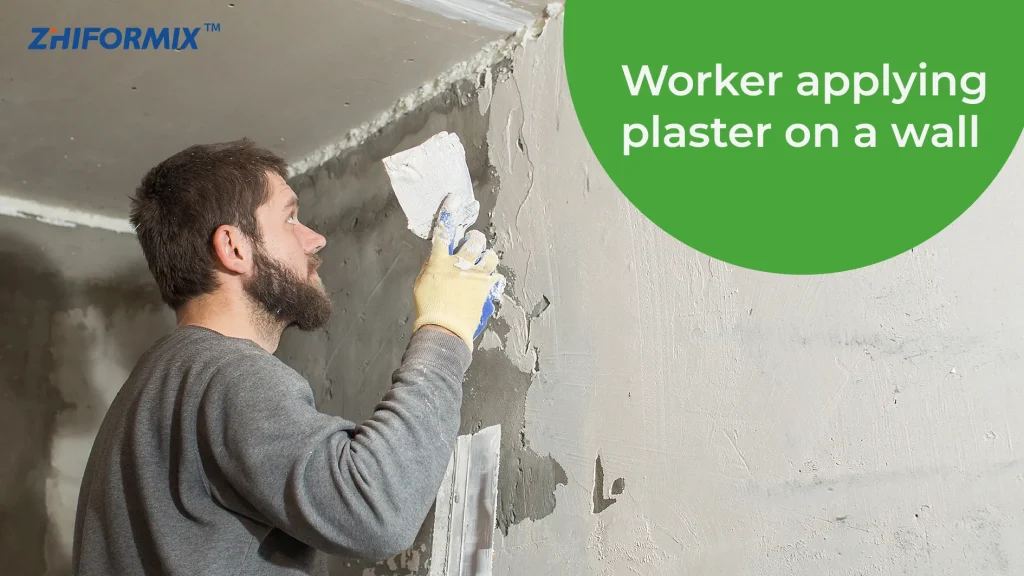
Every plasterer knows the frustration. You mix a fresh batch, turn around to grab your trowel, and the plaster is already stiffening in the bucket. Plaster sets fast by nature, and fast setting wastes material and ruins surfaces. The good news is that you can slow it down. This article gives you 7 practical methods to slow down plaster setting time, from simple job-site tricks to professional chemical retarders.
Whether you are a plasterer on site, a DIY user working with plaster of Paris, or a factory producing gypsum plaster products, these methods apply to you. Some take seconds to apply. Others need a small change in your formula. All of them are proven in real use.
Why Does Plaster Set So Fast?
Plaster starts as hemihydrate powder. When you add water, it turns back into dihydrate gypsum. This rehydration happens in stages. First the powder dissolves. Then the solution becomes supersaturated. Then tiny crystals form and grow into an interlocking network. That network is what makes the plaster hard.
The slow part is the crystal formation stage. Once crystals appear, growth is rapid. Anything that helps crystals form early makes the whole batch set faster. Anything that delays crystal growth slows the setting down. All 7 methods below work on this simple logic.
Method 1: Add a Gypsum Retarder
This is the most reliable method, and it is the standard in professional production. A gypsum retarder is a chemical additive that slows crystal growth. It stretches the working time from minutes to hours.
The three main retarder families are organic acids and their salts (such as citric acid), alkaline phosphates (such as sodium polyphosphate), and protein-based retarders. For hemihydrate gypsum, the normal dosage range is 0.03% to 0.5% of the gypsum weight. More retarder means a longer setting time.
Dosage control is important. Too much retarder can reduce the final strength of the plaster. Citric acid types are powerful but need careful dosing, ideally below 0.03% when strength matters. Always test a small batch with your own materials before full production.
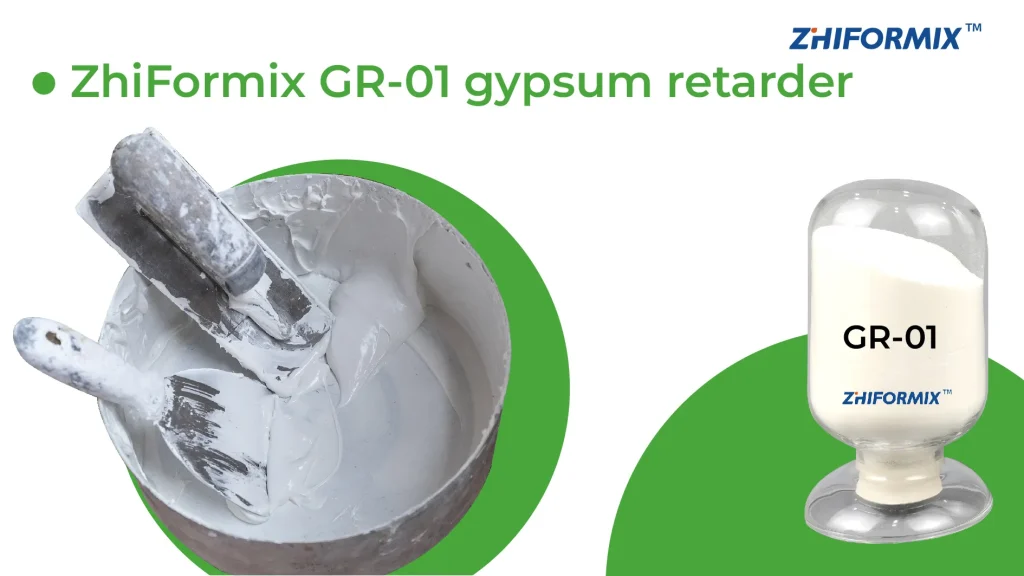
For a ready-made solution, ZhiFormix™ GR-01 from Zhiwei (Jinan) New Materials Co., Ltd. is a gypsum retarder built for plastering gypsum, bonding gypsum, and gypsum putty. It gives adjustable setting time through simple dosage changes, and Zhiwei provides technical support for your trials.
Method 2: Use Cold Water
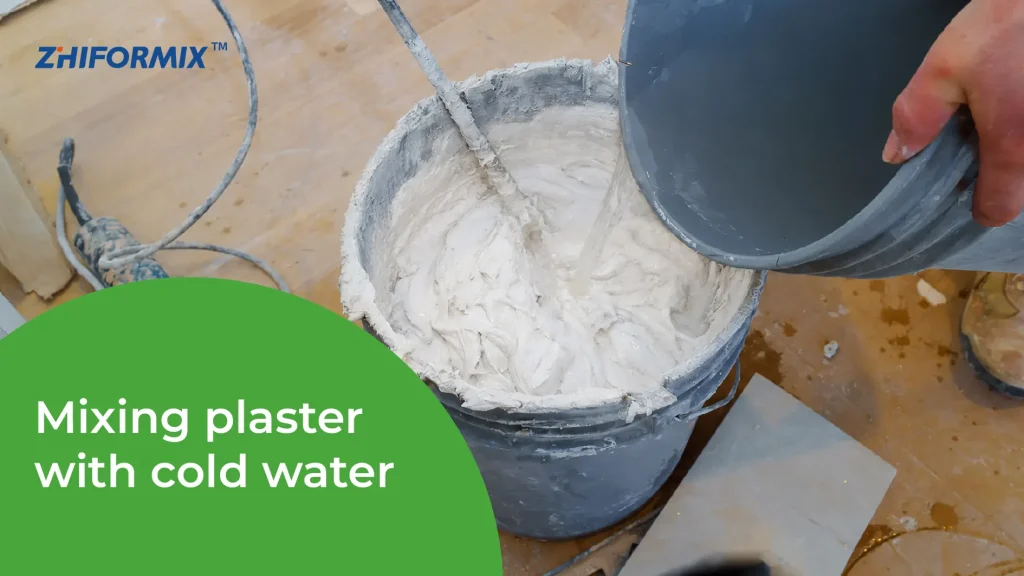
Water temperature changes the setting speed more than most people expect. Cold water slows the reaction down. Warm or hot water speeds it up.
This is one of the easiest tricks on a job site. Use cool or room-temperature water for mixing, and avoid warm water on hot days. The effect is noticeable even without any chemical additive. For best results, combine cold water with a proper retarder dosage. The two methods work well together.
Method 3: Adjust the Water-to-Plaster Ratio
More water means a slower set. A higher water-to-plaster ratio dilutes the mix and delays crystallization. This method costs nothing and needs no additives.
But there is a trade-off. Extra water weakens the final plaster. A soupy mix takes longer to set, and it dries into a softer, more powdery surface. Use this method with care. Stay close to the manufacturer’s recommended ratio, and make only small adjustments. If you need a big change in working time, use a retarder instead of extra water.
Method 4: Mix Gently and Briefly
How you mix matters as much as what you mix. Vigorous or prolonged mixing accelerates setting. Strong agitation helps crystals form earlier, and that shortens your working time.
Mix only as much as you need for uniformity. Sprinkle the plaster into the water, let it soak for a short moment, and then mix gently until smooth. Stop as soon as the mix is even. Long mechanical mixing after that point only steals working time from you.
Method 5: Keep Your Tools and Buckets Clean
This method surprises many beginners. Old plaster residue on your tools acts as an accelerator. Dried gypsum particles are seed crystals. When they fall into a fresh batch, they give new crystals a head start, and the whole mix sets faster.
Clean your buckets, trowels, and mixers thoroughly between batches. Remove every trace of set plaster from previous mixes. This is especially important with plastic buckets, where plaster residue sticks easily. Clean equipment alone can add precious minutes to your working time.
Method 6: Work in Cooler Conditions
Heat speeds up the setting reaction. A batch mixed on a hot afternoon sets noticeably faster than the same batch mixed on a cool morning. If you can choose your working conditions, choose the cooler ones.
On hot days, store your plaster powder and mixing water in the shade. Avoid leaving mixed plaster in direct sun. In factory production, keep the mixing area ventilated and cool. Temperature control is a quiet but powerful lever for setting time.
Method 7: Combine Retarder With Cement for Plastering Gypsum
Here is a proven trick for plastering gypsum. Combine your gypsum retarder with 0.5% cement. This combination extends the retarding effect and gives a longer, more stable working window than the retarder alone.
The method is simple and low cost. Add the small cement portion to your formula along with the retarder, and mix evenly. Test the combination with your own gypsum source first. Once dialed in, it delivers consistent results batch after batch.
Mistakes That Make Plaster Set Faster
Knowing what to avoid is as useful as knowing what to do. These four mistakes shorten your working time.
First, using hot water. It feels harmless, but it accelerates the reaction from the first second. Second, dirty mixing equipment, as covered above. Third, overmixing, which pushes crystallization forward. Fourth, re-tempering stiff plaster by adding more water and remixing. This never restores proper working time, and it produces weak, unreliable plaster. If a batch has stiffened, discard it and mix fresh.
The Professional Solution: ZhiFormix™ GR-01 From Zhiwei
Job-site tricks help, but consistent production needs a consistent product. ZhiFormix™ GR-01 from Zhiwei (Jinan) New Materials Co., Ltd. is a gypsum retarder designed for exactly this purpose.
ZhiFormix™ GR-01 works in plastering gypsum, bonding gypsum, gypsum putty, and gypsum-based products. It is a free-flowing powder that dissolves easily in water and blends evenly into dry mixes. The standard dosage range of 0.03% to 0.5% lets you dial the setting time from 30 minutes to several hours.
Three reasons professionals choose it. It gives predictable control over setting time, batch after batch. It is easy to use with normal mixing equipment and works with the 0.5% cement combination. And it comes with real technical support: Zhiwei helps with dosage testing and sample follow-up, so you can trial it with your own gypsum before ordering.
Stop fighting fast-setting plaster. Contact Zhiwei (Jinan) New Materials Co., Ltd. for samples, technical data, and a quote.
Frequently Asked Questions
How Can I Slow Down Plaster of Paris Setting Time?
Use a gypsum retarder, mix with cold water, keep your tools clean, and avoid overmixing. For the most reliable control, add a chemical retarder at 0.03% to 0.5% of the plaster weight.
Does Cold Water Really Slow Plaster Setting?
Yes. Cold or cool water slows the hydration reaction, while warm or hot water speeds it up. It is one of the simplest and most effective job-site methods.
Will More Water Keep Plaster Workable Longer?
Yes, but with a cost. A higher water-to-plaster ratio extends working time and weakens the final plaster. Make only small adjustments, and use a retarder when you need a bigger change.
Why Does My Plaster Set Faster in an Old Bucket?
Old plaster residue contains seed crystals of dihydrate gypsum. These seeds accelerate crystallization in the fresh batch. Clean all equipment thoroughly between mixes.
Can I Add Water to Plaster That Has Started to Set?
No. Re-tempering stiff plaster with extra water does not restore proper working time. It produces weak plaster with poor strength. Discard the stiff batch and mix a fresh one.
Where Can I Buy a Gypsum Plaster Retarder?
Zhiwei (Jinan) New Materials Co., Ltd. supplies ZhiFormix™ GR-01, a gypsum retarder for plastering gypsum, bonding gypsum, and gypsum putty. Visit zhiweichem.com to request samples and pricing.
Conclusion
Plaster sets fast because crystallization, once started, runs quickly. But you have many ways to slow it down. Use a gypsum retarder for the most reliable control. Mix with cold water, keep a sensible water ratio, mix gently, clean your tools, and work cool. For plastering gypsum, the 0.5% cement combination adds extra working time. And avoid the classic mistakes: hot water, dirty buckets, overmixing, and re-tempering.
For professional, repeatable results, a quality retarder beats every trick on this list. ZhiFormix™ GR-01 from Zhiwei (Jinan) New Materials Co., Ltd. gives you adjustable setting time, easy dosing, and technical support. Try it in your next batch and feel the difference that proper working time makes.