
Concrete has a deadline. From the moment water touches cement, the clock starts. In cool weather with a nearby plant, the normal setting time is enough. In hot weather, on a long haul, or on a massive pour, it is not. The concrete stiffens before the crew finishes, and the result is cold joints, poor surfaces, and wasted loads. A retarder solves this problem. This article explains the purpose of a retarder in concrete, how it works, the main types, and how to dose it correctly.
What Is a Retarder in Concrete?
A retarder is a chemical admixture added to concrete to delay its setting time. It does not change the final strength of the concrete. It only slows the early hydration reactions, so the concrete stays plastic and workable for longer.
Retarders are covered by the ASTM C494 standard for chemical admixtures. Type B is a retarding admixture. Type D is a water-reducing and retarding admixture. Type G is a high-range water-reducing and retarding admixture. These classifications help engineers specify exactly the behavior they need.
The key point is simple. A retarder buys time. Everything else follows from that.
The Core Purpose: Buying Time
Fresh concrete must be placed, compacted, and finished before it sets. The normal window is often 1 to 2 hours. Many real projects need more. A retarder extends that window by hours, and it does so in a controlled and predictable way.
After the concrete finally sets, hydration continues normally. Strength development proceeds at a normal or even accelerated rate. So the retarder changes the schedule, not the destination. The concrete still reaches its design strength.
5 Key Purposes of Retarders in Concrete
1. Beat Hot Weather
Heat is the biggest enemy of working time. High air temperature speeds up cement hydration, and concrete can stiffen alarmingly fast on a hot day. A retarder offsets this acceleration. It keeps the mix workable even when the thermometer climbs, so summer concreting stays practical and safe.
2. Survive Long Transport and Site Delays
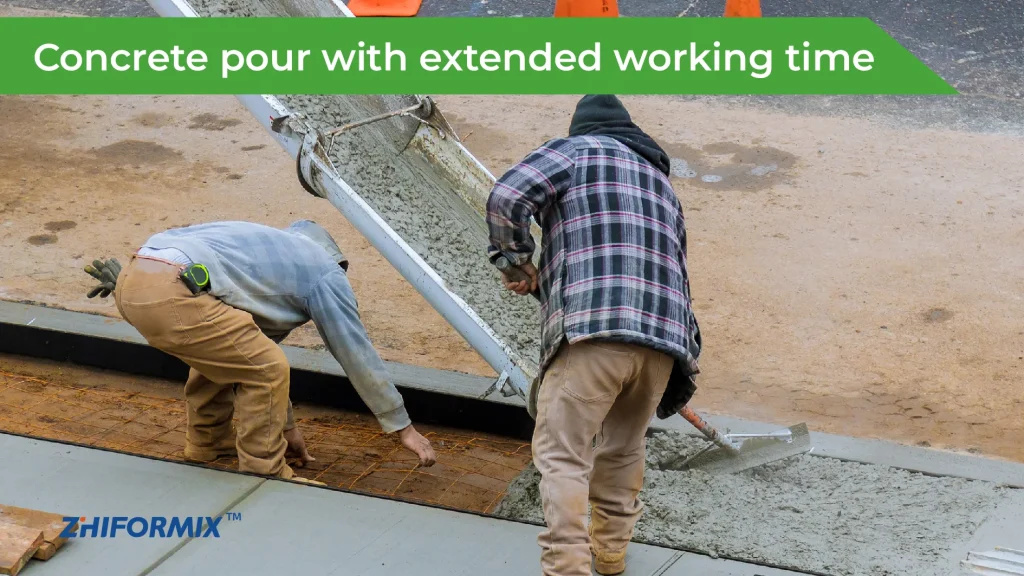
Not every site sits next to the batching plant. Long hauls, traffic jams, and waiting lines at the site all eat into working time. A retarder protects the load during the journey. The concrete arrives with enough plasticity left for proper placement and finishing, instead of arriving half-stiff and unusable.
3. Pour Large Structures Without Cold Joints
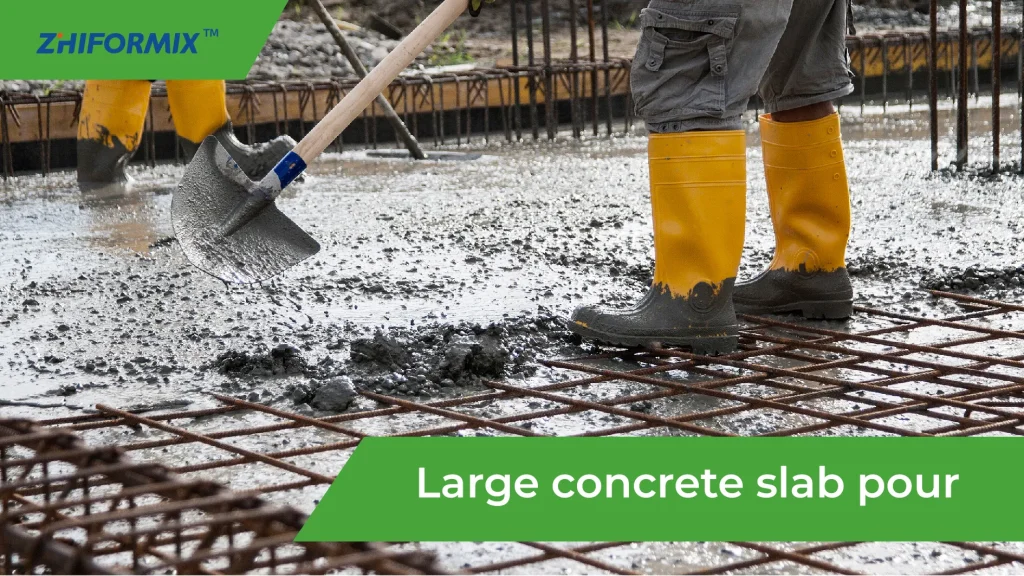
Big pours take time. Dams, thick foundations, large slabs, and tall walls cannot be placed in one quick shot. If one layer sets before the next arrives, a cold joint forms. Cold joints are weak planes, and they can leak. A retarder keeps each layer fresh long enough to bond with the next one. The pour stays continuous, and the structure stays monolithic.
4. Get a Better Finish
Rushed finishing leaves a poor surface. When the crew fights a stiffening mix, they cannot screed, float, and trowel properly. A retarder gives the finishing crew a calm, generous window. The surface comes out flat, dense, and even. For exposed slabs and architectural concrete, this extra time shows directly in the final appearance.
5. Ease Heat Buildup in Mass Concrete
Large concrete masses generate significant heat as cement hydrates. A fast, concentrated heat peak can cause thermal cracking. By slowing the early reactions, a retarder spreads the heat development over a longer period. The peak temperature drops, and the risk of thermal cracking goes down. This makes retarders valuable in mass concrete work.

How Concrete Retarders Work
The mechanism is straightforward. When cement meets water, several reactions start at once. The fastest ones involve tricalcium aluminate and the early silicate reactions. Retarder molecules attach themselves to the surface of the cement particles. This thin molecular layer slows the contact between cement and water.
Think of it as a temporary brake. The brake holds during the first hours, when workability matters most. Then it releases. Hydration resumes, the concrete sets, and strength develops normally. The delay is temporary by design.
The amount of delay depends on the chemistry and the dosage. Under standard test conditions, Type B and Type D admixtures must delay initial setting by at least 1 hour compared with plain concrete. In practice, almost any degree of retardation can be achieved by adjusting the product and the dose.
Common Types of Concrete Retarders
Retarders come from several chemical families. Each one has its own character, and the choice depends on the project and the cement.
Lignosulfonates are among the oldest and most widely used. They come from wood processing, and they both retard setting and reduce water slightly. Many Type D admixtures are based on lignosulfonates.
Hydroxycarboxylic acids and their salts include citric acid, tartaric acid, and gluconic acid (often used as sodium gluconate). These give strong and predictable retardation. Small doses produce large effects, so accurate dosing matters.
Carbohydrates and sugars also retard cement hydration. They are simple and effective, but they need careful control because the effect can be strong.
Phosphates and phosphonates form another group. They interact with cement chemistry and give steady retardation, especially at higher temperatures.
Many commercial products combine these chemistries. A Type D admixture, for example, pairs water reduction with retardation in one product. A Type G product does the same at high-range water reduction levels.
Dosage: How Much Retarder Does Concrete Need?
There is no single correct dosage. The right amount depends on the cement type, the ambient temperature, the desired delay, and the specific product. Typical commercial dosages run from a fraction of a percent to around one percent or more of the cement weight. The product data sheet gives the starting range.
Two rules matter most. First, always run trial mixes. Lab or site trials with your actual cement, aggregates, and temperature conditions are the only reliable way to set the dose. Second, avoid overdosing. Too much retarder can delay setting excessively, cause rapid slump loss afterward, and increase the risk of plastic shrinkage cracking. Careful dosing keeps all the benefits and none of the problems.
Temperature deserves special attention. The same dose gives different retardation at different temperatures. Hot weather usually needs a higher dose for the same effect. Keep dosage records for different seasons, and adjust as conditions change.
Do Retarders Weaken Concrete?
This is the most common worry, and the answer is reassuring. Retarders delay setting, but they do not reduce long-term strength. After setting occurs, hydration and hardening proceed at normal or accelerated rates. The concrete reaches its design strength on schedule.
Early-age strength may develop slightly later than in plain concrete. That is the expected trade-off for longer working time, and it rarely causes problems. Formwork striking times may shift by a few hours. Plan for it, and the project stays on track.
The real risk is not normal dosing but overdosing. Excessive retarder can keep concrete plastic far too long and create finishing and scheduling headaches. Stick to tested dosages, and strength will take care of itself.
Retarder vs. Other Concrete Admixtures
It helps to see where retarders sit among their neighbors.
| Admixture | Purpose | ASTM C494 Type |
|---|---|---|
| Retarder | Delays setting, extends working time | Type B |
| Water reducer + retarder | Reduces water and delays setting | Type D |
| High-range water reducer + retarder | Large water reduction with delayed setting | Type G |
| Accelerator | Speeds up setting and early strength | Type C |
| Water reducer | Reduces water content | Type A |
Retarders and accelerators are opposites. One buys time, the other saves it. Water reducers and superplasticizers change the water content and flow, and some also shift the setting time as a side effect. The right choice depends on what your project needs most: time, strength speed, or water reduction.
Choosing the Right Solution for Your Project
Start from the problem. Hot weather concreting, long hauls, and large continuous pours point toward a retarder or a retarding water reducer. Tight schedules and cold weather point toward an accelerator instead. Talk to your admixture supplier, share your mix design and site conditions, and run trials before the first real pour.
Zhiwei (Jinan) New Materials Co., Ltd. supplies construction chemical additives to customers around the world. The company is known for its cellulose ethers and its gypsum retarder ZhiFormix™ GR-01, and it brings the same quality mindset to every product line. If your project involves gypsum-based materials, ZhiFormix™ GR-01 gives you adjustable setting time with reliable technical support. For concrete admixture questions, the Zhiwei team can help you find the right direction. Contact Zhiwei (Jinan) New Materials Co., Ltd. to discuss your application.
Frequently Asked Questions
What Is the Purpose of a Retarder in Concrete?
Its purpose is to delay the setting time of concrete and extend the working window. This helps in hot weather, during long transport, and on large pours where continuous placement matters.
How Long Does a Retarder Delay Concrete Setting?
It depends on the product and dosage. Under standard conditions, ASTM Type B and Type D admixtures delay initial setting by at least 1 hour. With higher doses, delays of several hours are achievable.
Will a Retarder Reduce My Concrete Strength?
No. Long-term strength develops normally after setting. Early strength may arrive slightly later, but the design strength is not reduced.
Can I Use Too Much Retarder?
Yes. Overdosing can cause excessive delay, rapid slump loss, and plastic shrinkage cracking. Always follow the product data sheet and confirm the dose with trial mixes.
What Is the Difference Between Type B, Type D, and Type G Admixtures?
Type B only retards setting. Type D reduces water content and retards setting. Type G gives high-range water reduction together with retarded setting. All three fall under ASTM C494.
Do Retarders Work in Cold Weather?
They work, but they are rarely needed in cold weather. Cold already slows setting. Retarders are mainly a hot-weather and long-haul solution.
Conclusion
The purpose of a retarder in concrete is simple: it buys time. It delays setting so crews can transport, place, and finish concrete under difficult conditions. It beats hot weather, survives long hauls, prevents cold joints in large pours, improves finish quality, and eases heat buildup in mass concrete.
Retarders work by temporarily slowing cement hydration, and they release their hold once the working window has passed. Strength development then proceeds normally. Choose from lignosulfonates, hydroxycarboxylic acids, sugars, or phosphates, dose carefully with trial mixes, and respect the temperature. Do that, and the retarder becomes one of the most cost-effective tools on your project.